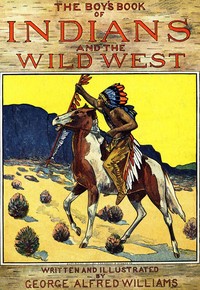
The Boy's Book of Indians and the Wild West by George Alfred Williams
Let's be clear from the start: this isn't a storybook. Published in 1912, The Boy's Book of Indians and the Wild West is a manual. It's a how-to guide for a world that, even then, was fading into history. George Alfred Williams writes with the energetic tone of a favorite uncle, aiming to equip young boys with the skills and knowledge of a frontiersman.
The Story
There's no plot in the traditional sense. Instead, the book is a collection of chapters and illustrations that act as a field guide to a romanticized American West. Williams walks his reader through the practicalities of frontier life: how to build a fire without matches, identify animal tracks, and construct different types of shelters. A significant portion is dedicated to describing the customs, clothing, and sign language of various Native American tribes, though these descriptions are filtered through the simplistic and often stereotypical lens of the early 1900s. It presents the West as a giant playground for adventure, where danger is just a setup for excitement.
Why You Should Read It
You don't read this book for historical accuracy. You read it as a cultural artifact. The real value is seeing how myths are made. This book helped shape the imagination of young boys who would grow up to watch Westerns, read Zane Grey novels, and cement the 'cowboys and Indians' trope in popular culture. It's startling to see complex cultures summarized into adventure tips and to witness the confident, simplistic way history was packaged for kids. It's a direct line to understanding a certain kind of American childhood from over a century ago. The earnestness is palpable, and that's what makes it so compelling—and occasionally uncomfortable—to a modern reader.
Final Verdict
This book is a niche pick, but a rewarding one. It's perfect for history buffs interested in pop culture and education, or for writers wanting to understand the roots of Western genre conventions. It's also great for anyone who enjoys seeing how attitudes change over time. I wouldn't recommend it for casual entertainment or for young kids today without serious context. Approach it like a museum exhibit: fascinating, informative, and a clear product of its time. Keep your historical perspective handy, and you'll find a strangely charming portal to the past.
You are viewing a work that belongs to the global public domain. Share knowledge freely with the world.