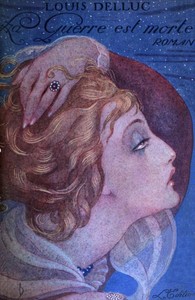
La Guerre est morte: roman by Louis Delluc
Louis Delluc wrote this in 1919, with the dust of the First World War still settling. It's a slim book, but it carries a heavyweight punch.
The Story
We follow Jean, a young French soldier who survives the trenches and returns to Paris. On the surface, he's fine – physically whole, ready to resume his old life as a clerk and marry his sweetheart, Madeleine. But something is broken. The routines of his office job feel absurd. The chatter of his old friends about parties and politics seems trivial. Even being with Madeleine feels like an act. He's haunted not by specific horrors, but by a vast, numb emptiness. The war has rewired him, leaving him a spectator in his own life, unable to connect with the very peace he fought for. The story follows his quiet, internal unraveling as he drifts through a city trying to forget, while he cannot.
Why You Should Read It
This book got under my skin. Delluc doesn't give us dramatic flashbacks or battle scenes. Instead, he shows the aftermath in the small moments: the way Jean stares at a wall, the silence that hangs over a dinner table, the gulf that opens in a simple conversation. It's a masterclass in showing, not telling, psychological trauma. You feel Jean's dislocation in your bones. It’s less about the war he left and more about the peace he can't enter. What struck me most is how it captures a very modern understanding of trauma – the idea that you can be wounded by an experience even without a visible scar. Jean isn't a hero or a victim; he's just a man trying to fit a shattered version of himself back into a mold that no longer exists.
Final Verdict
This is a must-read for anyone interested in the human side of history, not just the dates and battles. It's perfect for readers who love character-driven stories that explore quiet despair, or for fans of post-war literature like Hemingway's A Farewell to Arms, but from a uniquely French, interior perspective. It’s not a cheerful read, but it’s a powerful and surprisingly quick one. A haunting reminder that sometimes, the hardest part of a war is learning how to live after it.
The copyright for this book has expired, making it public property. Knowledge should be free and accessible.