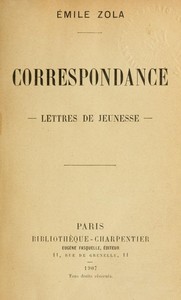
Correspondance: Lettres de jeunesse by Émile Zola
Forget the grand, sweeping narratives of Germinal or Nana for a moment. 'Correspondance: Lettres de jeunesse' strips all that away and shows us the boy behind the legend. This book is a collection of Émile Zola's personal letters, written between 1858 and 1865. It's not a novel with a traditional plot, but the story it tells is utterly compelling: the coming-of-age of a genius.
The Story
The 'story' here is Zola's life from adolescence to young adulthood, told in his own words. We follow him from a struggling, lonely schoolboy in Provence to a pennished young man trying to make it in Paris. Through letters to his closest friends—like the painter Paul Cézanne and the writer Baptistin Baille—we see his daily struggles. He writes about being broke, hating his clerical job, and dreaming of literary glory. We read his passionate arguments about art and poetry, his detailed descriptions of long walks in the countryside, and his heartfelt (and sometimes dramatic) expressions of friendship. There's no single event, but a gradual evolution: you watch his confidence grow, his ideas solidify, and the determined, observational writer begin to take shape.
Why You Should Read It
This book completely changed how I see Zola. The man known for his fierce social critiques and almost scientific detachment was, as a young man, a hopeless romantic, deeply sentimental, and full of anxiety. His letters to Cézanne are especially moving—full of a youthful idealism about changing the world through art. Reading his frantic notes about money troubles or his excited plans for future masterpieces makes him profoundly human. It's a powerful reminder that even the greats started out unsure, passionate, and a bit messy. You get the sense that without this intense, loyal circle of friends cheering him on, the Zola we know might never have emerged.
Final Verdict
This one is perfect for Zola superfans, aspiring writers, or anyone who loves a good biographical deep dive. It's not a page-turning thriller; it's a slow, rewarding immersion into a young man's mind. If you enjoy reading historical letters or diaries that make the past feel immediate and personal, you'll be captivated. Think of it as the ultimate bonus feature for Zola's life story—essential context that makes his later monumental work feel even more impressive. A truly special glimpse behind the curtain.
This work has been identified as being free of known copyright restrictions. Knowledge should be free and accessible.