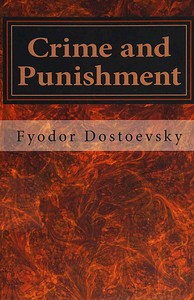
Crime and Punishment by Fyodor Dostoyevsky
Let's talk about one of the most intense psychological trips ever put on paper: Crime and Punishment. Forget fancy literary terms—this book is a raw, messy, and utterly gripping look inside a crumbling mind.
The Story
We meet Rodion Raskolnikov, a former law student living in a grimy St. Petersburg attic. He's brilliant, proud, and completely broke. He cooks up a dangerous theory: that 'extraordinary' people have the right to break moral rules for a greater good. To test this, he decides to murder a vile old pawnbroker, telling himself he'll use her money to help others.
The crime is messy and horrific. Almost immediately, things go wrong. He barely escapes and can't bring himself to use the stolen goods. What follows is a masterclass in suspense. The real action isn't in the streets; it's inside Raskolnikov's head. Paranoia, fever, and a deep, sickening guilt take over. He acts erratically, pushing away his family and the few people who care for him, like the gentle Sonia.
Meanwhile, the investigator Porfiry isn't chasing him with handcuffs. He's playing a psychological game, circling Raskolnikov with quiet conversations and knowing smiles, waiting for his conscience to do the work. The question becomes less 'will he get caught?' and more 'can he live with himself?'
Why You Should Read It
This book grabbed me and didn't let go. Dostoyevsky doesn't just tell a story; he makes you feel the suffocating weight of a secret. You're right there in that tiny room with Raskolnikov, feeling his panic after a knock at the door. The side characters aren't just background—they're mirrors reflecting different parts of his soul, from his selfless sister Dunya to the drunken wreck Marmeladov.
It's also way funnier than you'd expect. The dialogue is sharp, and the scenes of bureaucratic nonsense and social awkwardness are darkly hilarious. At its heart, the book asks huge questions we still wrestle with: Where does our morality come from? Is suffering necessary for redemption? Can intellectual ideas ever justify real-world horror?
Final Verdict
Perfect for anyone who loves a character-driven mind game more than a straightforward plot. If you enjoyed the internal chaos of Breaking Bad's Walter White or the moral puzzles in a classic film noir, you'll find a kindred spirit in Raskolnikov. It's a challenging, sometimes uncomfortable read, but it rewards you with an understanding of human nature that sticks with you long after the last page. Just be ready to question your own thoughts a little.
This masterpiece is free from copyright limitations. Feel free to use it for personal or commercial purposes.