
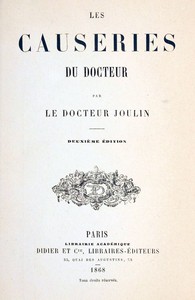
Les causeries du docteur by Désiré Joseph Joulin
Published in the mid-1800s, Les causeries du docteur (which translates to The Doctor's Chats) is a unique book. It's structured as a series of fictional weekly gatherings hosted by a country doctor. Each chapter is a different 'causerie,' or conversation, where a rotating cast of villagers comes together in the doctor's parlor.
The Story
There's no single plot in the traditional sense. Instead, the book is driven by the debates themselves. One week, the topic might be a shocking new theory from England about where humans came from. Another week, it's about whether new surgical methods are ethical. The doctor acts as the moderator, gently guiding the talk and presenting evidence, while his guests react. You'll see the mayor get flustered, the priest offer spiritual counterpoints, and the young student brim with excitement over new ideas. The drama comes from watching real, stubborn human personalities wrestle with concepts that threaten to turn their world upside down.
Why You Should Read It
What grabbed me was how incredibly modern these conversations feel. Swap out the horse carriages for cars, and you could be reading about a tense family dinner today where people argue about climate change or AI. Joulin, who was a real doctor, has a sharp eye for how people defend their beliefs. The characters aren't just mouthpieces for ideas; they feel like real people who are scared, proud, curious, or defensive. You won't always agree with the doctor, and that's the point. The book doesn't give easy answers. It shows the messy, beautiful struggle of trying to understand a changing world through dialogue.
Final Verdict
This is a perfect pick for readers who love history, ideas, and character-driven stories. If you enjoyed the philosophical debates in novels like The Elegance of the Hedgehog or the social observation in George Eliot's work, you'll find a lot here. It's not a fast-paced thriller, but a slow, rich simmer of a book. You read it for the brilliant character clashes and the chance to time-travel into the living room of a thinker who believed, above all, in the power of a good talk. Keep in mind it's a 19th-century French text, so the prose has a formal rhythm, but the human heart of the conflicts beats as loud as ever.
There are no legal restrictions on this material. You are welcome to share this with anyone.
Matthew Davis
1 year agoThe fonts used are very comfortable for long reading sessions.


Kenneth Harris
11 months agoRead this on my tablet, looks great.